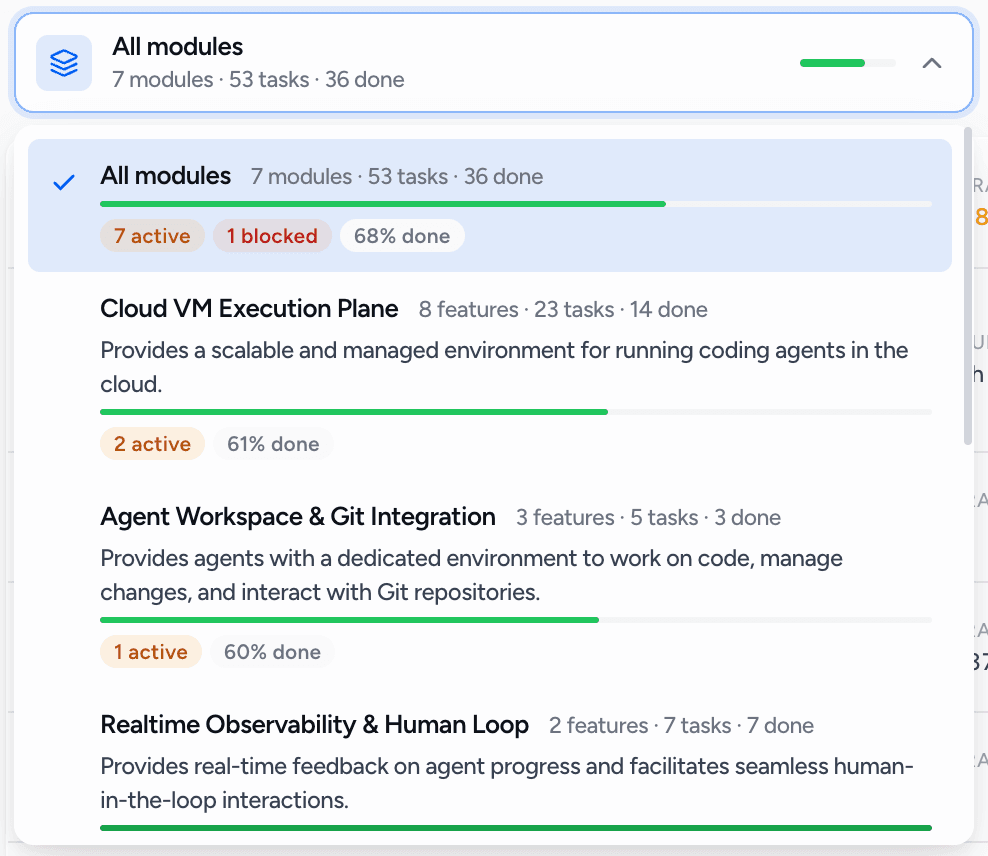
One plan. Anyone can open a PR.
Some of your team codes. Some don't. All of them need to change the product. Scope Architect gives everyone the same board and gives the engineers the merge button. A copy tweak or a small bug becomes a task and a pull request, not a Slack thread and a ticket.
Roles decide who can queue. Gates decide what runs.
Invite the team with magic links and pre-assigned roles. Marketing and design can pick tasks and queue runs. Engineering owns review and merge. Every run is approval-gated, every change is attributed to the person or agent that made it, and a field locks while someone is editing it so people and agents never race.
Track it →- Roles and permissions
- Magic-link invites
- Approval gates on every run
- Attribution, human or agent
- Field locking on edits
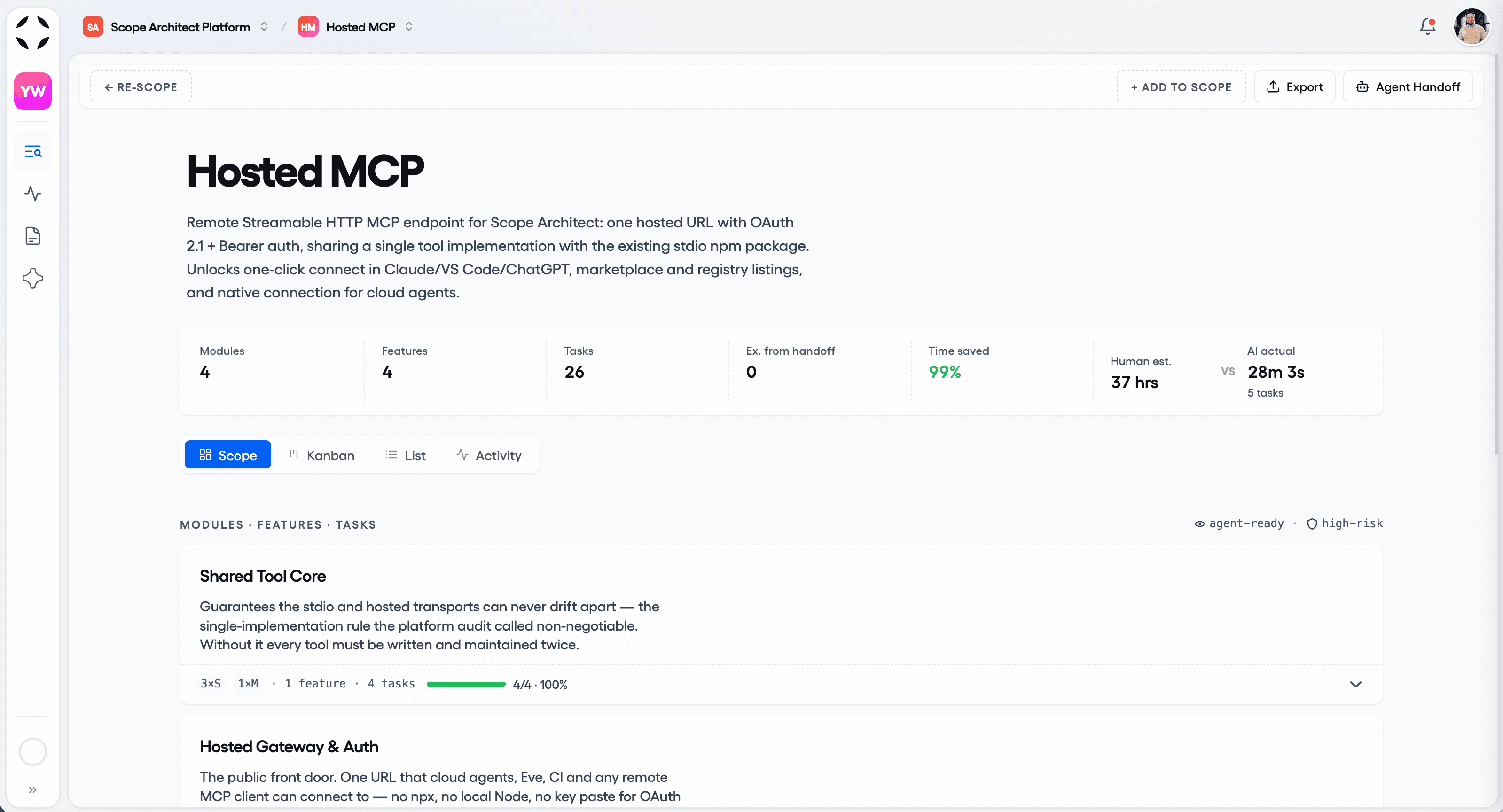
A copy tweak is a task, not a ticket.
Someone in marketing pastes the bug report or the new pricing line into the scope. It becomes a task with acceptance criteria. They queue it. A cloud agent builds it in a fresh VM with the plan and the codebase in hand and opens a pull request. An engineer reviews it like any other PR and merges. Nobody waited for a sprint.
Build from it →- Paste a bug report, get a task
- Queue it from the board
- Cloud run, PR back
- Review and merge stay with engineering
- The marketing site itself runs this way
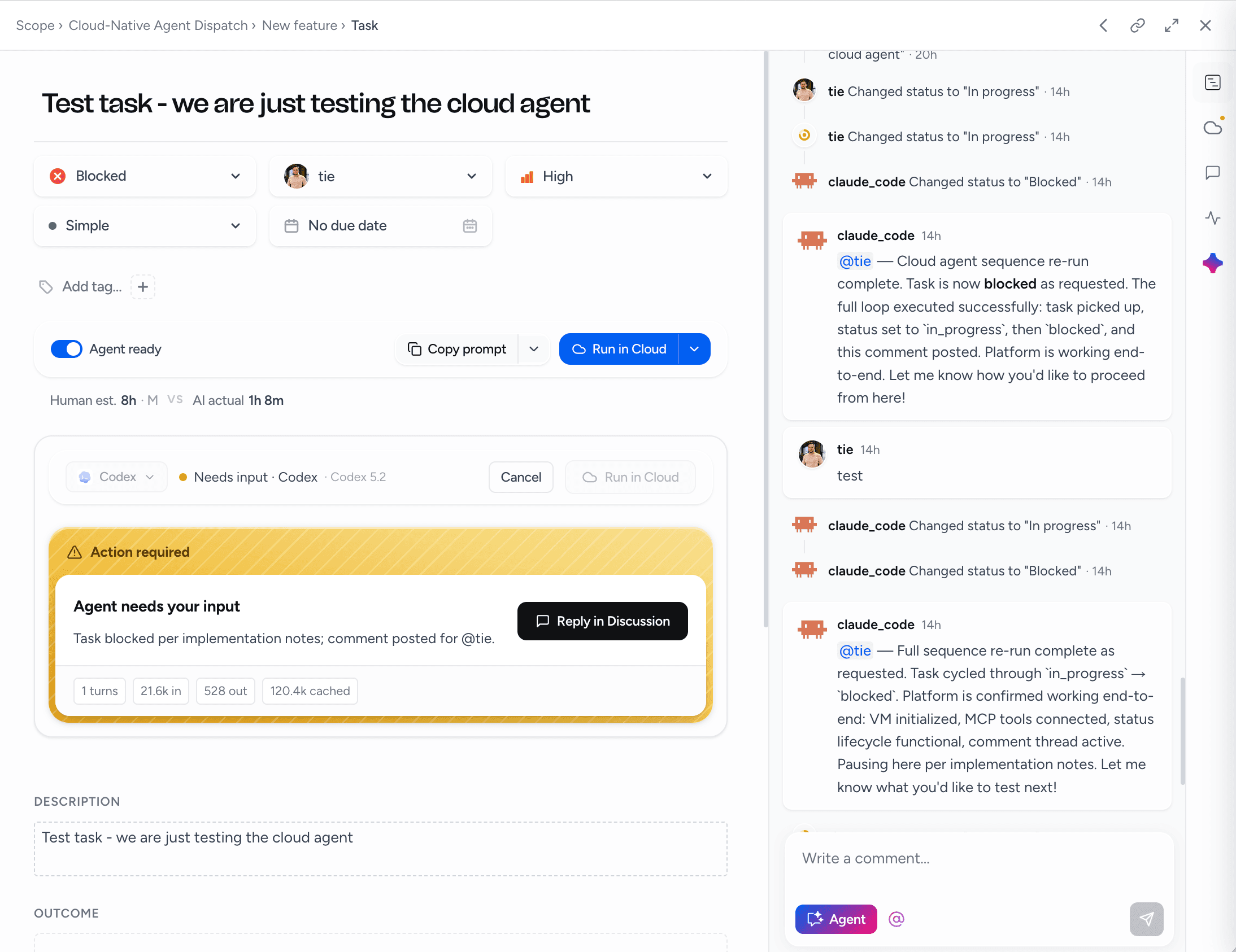
Attribution, cost, and the whole history on the task.
Pooled credits across seats, tokens and spend on every run, and one activity feed of who changed what. When a question comes up three weeks later, the answer is on the task: who asked for it, which agent built it, what it cost, and the PR that shipped it. Multiple GitHub accounts, one board.
See Team pricing →- Pooled credits per seat
- Tokens and spend per run
- Activity feed across the project
- Multiple GitHub accounts
- Custom billing on request