See Scope Architect on your own project. Get a walkthrough →

One board every agent
reads and writes.

Statuses, comments, memory, and cost, updated live as humans and agents work. Switch chats, switch agents: nothing to re-explain, nothing happening out of sight.

Payments · 5 tasksagent active · 2m ago
Stripe webhook handlerin progressclaude code
Checkout session endpointin reviewcursor
Subscription status syncblockedcodex
Pricing table componentdoneclaude code
Usage metering crontodoqueued
Needs input · Subscription status syncShould past_due keep access for 7 days or cut immediately?
Keep it 7 days. Email on day 1 and day 5.

One source of truth for you and every agent.

Chat forgets everything the moment the session ends. Scope Architect is the structured layer you and every agent build from: the plan, the context, the memory, and the live state, all in one place.

Realtime execution and orchestration.

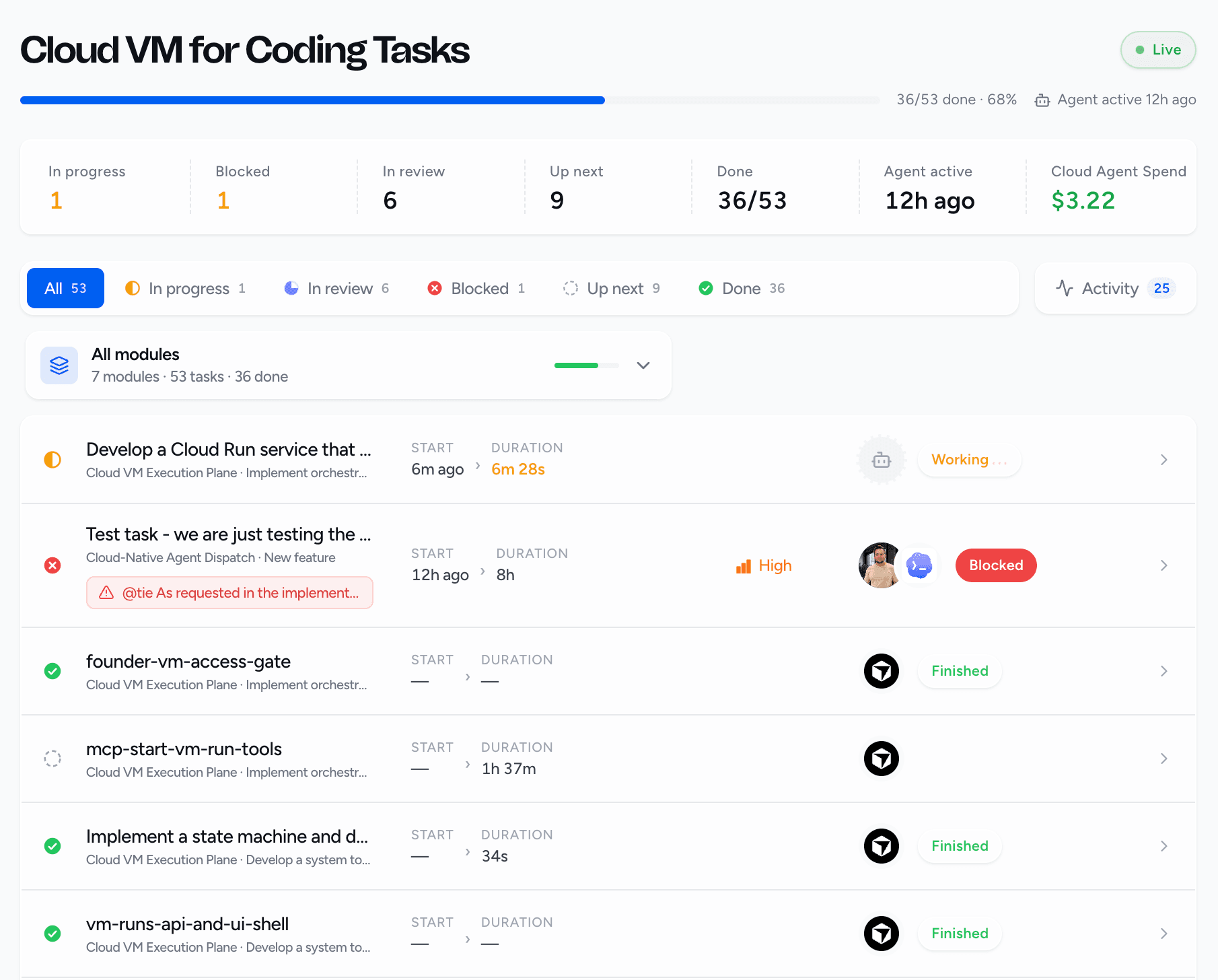
Hand off to your agent, run the build, and watch every task move, all from one Command Center your whole team can see.

One view of every task, human and agent.

Statuses, blockers, comments, and live activity from your whole team and every agent, in one Command Center.

Command Center

Hand off via MCP

Connect once. Your agent reads the live plan and writes back as it builds, with no copy-paste.

One-click prompt copy

Grab a task-ready prompt for any agent in a single click.

Granular tracking

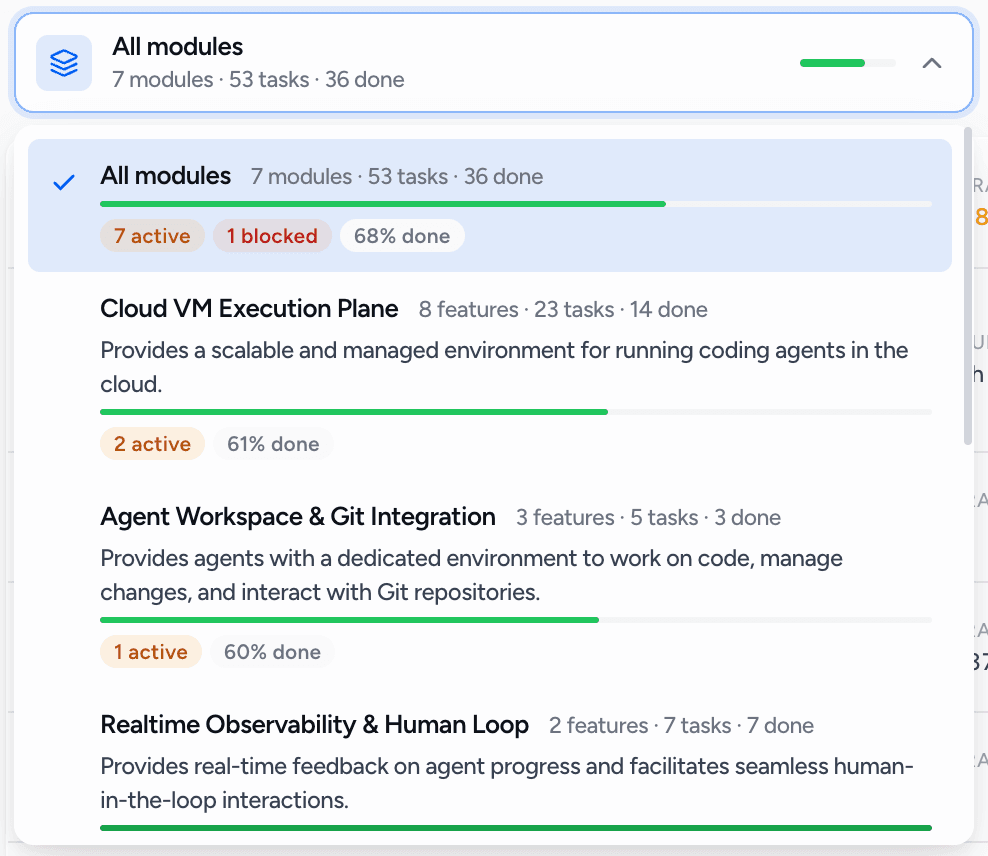
Track progress across modules, features, and tasks as the build moves.

Tracking modules, features, and tasks

Track token usage

See tokens and spend for every agent run.

Run the task in the cloud

Dispatch a task to a cloud run. Claude Code builds it in a fresh, isolated VM and opens a PR, with no local setup.

Your agent asks. You answer. It keeps building.

When an agent hits a decision it can't make, it flags the task, comments in the workspace, and pauses. You reply on the task, from your desk or your phone, and the run resumes with the answer in hand. No new chat session, no context reset. Choose whether a blocked agent moves on to the next task or waits.

The loop
  • Clarification requests from any agent
  • Reply on the task, run resumes
  • @mentions for humans and agents
  • Block policy: multitask or pause
  • In-review notifications
  • Desktop notifications
Modules and tasks tracked live, with an agent waiting on a comment reply

Build at AI speed without losing control.

Context lost every session
Flying blind while it builds

The workspace is the source of truth.

Your entire project and context live in the workspace, not the chat. Hand off to your agent via MCP, or dispatch a task to a cloud run. Both read the live plan from the same place. No re-explaining.

See the build as it moves.

Statuses, comments, and flags update live in the workspace as agents work, whether connected over MCP or running a task in the cloud. Nothing happens out of sight.

Silent decisions you find out later
The build outruns you

Every call is surfaced, not buried.

Every edge case is surfaced in your Command Center. The agent flags the task, comments in the workspace, and pauses until you unblock it.

Stay in control at AI speed.

Hand off via MCP or dispatch a task to a cloud run. The plan and live state stay in one Command Center, so you direct the build instead of chasing it.

Your AI is only as good as what it knows.

Three layers, one workspace. Context blocks carry the always-on rules. Memory holds what was tried and decided, so a fresh chat picks up with everything the last one knew. Docs hold the long-form reference, and when an agent makes a notable decision it writes it back, so knowledge grows instead of leaking away.

Knowledge
  • Context blocks, injected on every session
  • Memories agents record and search
  • ADRs, runbooks, and API notes
  • Pin docs your agent should always read
  • Promote a memory to always-on context
  • Product-level knowledge shared across projects
Contextalways onShort, structured blocks with the decisions, constraints, and conventions. Read on every session.
Memoryagents + humansWhat was tried, what was decided, what's off the table. A fresh chat picks up with everything the last one knew.
Docslong-formADRs, API notes, runbooks. Pin the ones your AI should always have; it pulls the rest on demand and writes new ones back.

Humans and agents on the same plan.

Invite your team with magic links and pre-assigned roles. When someone edits a task it locks for everyone else until the change is committed, so agents and people never race. Credits pool across seats, every run shows its tokens and spend, and each teammate's agents write to the same board.

Working together
  • Roles and permissions
  • Magic-link invites
  • Field locking on edits
  • Comments and mentions
  • Tokens and spend per run
  • Multiple GitHub accounts on Team
A team's project in Scope Architect with modules, features, and tasks tracked together
3Handoff paths: MCP, prompt copy, and cloud runs
PRPull requests from cloud runs
LiveStatuses and comments in your Command Center
Being able to integrate Scope Architect into my existing coding workflow as the home base for my entire project execution and context management makes building with AI so much easier and more efficient. Your ideas and project shouldn't live in the code.
TieFounder, Scope Architect

The rest of the operating surface.

Approval-gated edits

Scope changes and run plans proposed in chat render as cards. Nothing applies until you approve.

Task drawers

Everything about one task in one place: criteria, comments, notes, artifacts, history.

Builder notes

Internal notes agents can't read. Risk flags and reminders stay yours.

Preview links

Cloud runs attach a preview URL to the task so review starts before the PR does.

Usage dashboard

Every AI operation metered with tokens and cost, per project and per operation.

Activity feed

A single stream of who changed what, human or agent, across the project.

Plan the build.
Watch it move.